----From Joshua Project:Introduction / HistoryThe Bati people are a small, Muslim indigenous group who live on the far eastern edge of Indonesia's Maluka Island. The Bati are known for their legend about a flying primate-like creature that can take small children away from their families. The legend may have come from large eagles who are able to carry off a small child. The Bati speak their own language of Bati. Many of the Bati men have a working knowledge of Bahasa Indonesian, the national language, so they can carry on trade with other groups.What Are Their Lives Like?The Bati live in a tropical rain forest near rivers and the ocean. The Bati earn a living primarily by fishing. Bati women are involved in cultivating rice, maize, coconuts, fruits and vegetables. They sell their surplus rice and fish to buy things they cannot make for themselves like cell phones and appliances. Bati homes are often built on stilts to keep the house dry during periods of flooding. Village elders make judicial decisions and deal with outsiders.The Bati marry within their group. Families and young people arrange marriages. A man can have up to four wives if he can afford them, but monogamy is the norm. The Bati have large families; they view children as a blessing from Allah. Many children die before their tenth birthday due to lack of modern medicine. It is the sons' responsibility to take care of their elderly parents.The Bati are primarily an oral culture. Many women are unable to read and write. The Bati pass down important traditions through poems, songs, dances and artwork. The Bati live in such a remote area that few schools exist to educate their children.What Are Their Beliefs?The Bati people are officially Sunni Muslim, but also believe in natural spirits and the ghosts of their ancestors. These spirits must be appeased or they can bring disaster upon the people.What Are Their Needs?The new churches among the Bati need pastors and Bible teachers. The Bati need to see the love of Christ demonstrated among them in practical ways, including through modern medicine, education, and modern technology such as solar panels.The Bati language has no Christian resources, so they need a translation of the New Testament. Due to the lack of literacy, especially among the women, the Bati especially need audio resources.Prayer PointsAsk the Lord to send loving, Holy Spirit-anointed workers to the Bati and to direct them to Bati who are hungry for spiritual truth.Pray that the new Bati believers would grow in their faith and their knowledge and practice of the Bible.Pray that every Bati person would have the opportunity to hear the gospel in a way he or she can understand.Ask God to initiate a Disciple Making Movement to spread throughout Bati communities in this decade.Profile Source: Joshua Project General InfoPeople Name General BatiPeople Name in Country BatiAlternate Names Bush BatiPopulation this Country 5,500Population all Countries 5,500Total Countries 1Indigenous YesProgress Scale 1 ●Unreached YesFrontier People Group YesGSEC 6 (per PeopleGroups.org)Pioneer Workers Needed 1People ID 10726ROP3 Code 101137ROP25 Code 309193ROP25 Name Bati (Indonesia)#bati #bushbati
SEO: Pacoh Phacoh Alternate names: Paco, Pokoh, Bo River Van Kieu. Its dialects are Pahi (Ba-Hi). Links: https://www.ethnologue.com/language/pac https://globalrecordings.net/en/language/PAC https://www.researchgate.net/publication/280082359_A_grammar_of_Pacoh_A_Mon-Khmer_language_of_the_central_highlands_of_Vietnam https://en.wikipedia.org/wiki/Pacoh_language https://www.wikiwand.com/en/Pacoh_language https://dbpedia.org/page/Pacoh_language https://www.webonary.org/pacoh/language/ https://joshuaproject.net/languages/pac https://joshuaproject.net/people_groups/14249/LA https://openresearch-repository.anu.edu.au/bitstream/1885/146283/1/580_Alves.pdf The Pacoh language is a member of the Katuic language group, a part of the Eastern [1] Mon–Khmer linguistic branch. Most Pacoh speakers live in central Laos and central Vietnam.[2] Pacoh is undergoing substantial change, influenced by the Vietnamese.[3] Alternative names are Paco, Pokoh, Bo River Van Kieu. Its dialect...
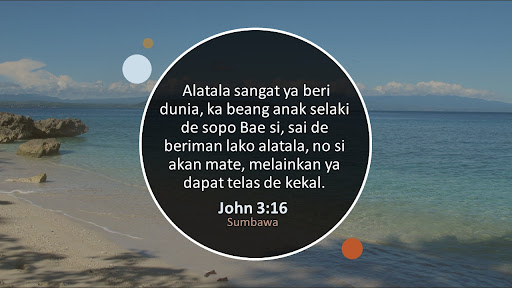
John 3:16 - Sumbawa Alatala sangat ya beri dunia, ka beang anak selaki de sopo Bae si, sai de beriman lako alatala, no si akan mate, melainkan ya dapat telas de kekal. This language is also known as Bahasa Sumbawa, Sumbawarese Sumbawa, Bible, Bahasa Sumbawa, Sumbawarese, Basa Semawa, Bima, Sumbawa Island, Bali, Lombok, Sprachbund, Satera Jontal, Indonesia, John 3:16, SEO: Sumbawa ( basa Semawa ; Indonesian : bahasa Sumbawa ) or Sumbawarese is a Malayo-Polynesian language of the western half of Sumbawa Island, Indonesia , which it shares with speakers of Bima . It is closely related to the languages of adjacent Lombok and Bali ; indeed, it is the easternmost Austronesian language in the south of Indonesia that is not part of the Central Malayo-Polynesian Sprachbund . The Sumbawa write their language with their own native script commonly known in their homeland as Satera Jon...
2023 Draft Translation - Alak ພະເຢໂອວາຮັກໂລກນີ້ທີ່ສຸດ ໄອາມອບກອນໂກ໊ຍຈ໌ມາຣາ ເປືອແຕ່ລາໂທຍທີ່ເຊື່ອຖືໄອາວ(ກອນໂກ໊ຍຈ໌ມາຣາ) ອິຢິ໊ເກີດຊີດ ແຕ່ວ່າເກີດຊີວິດອະມະຕະ(ແທນ) ຈອນ 3:16 Metadata: Alak is a language spoken by some 4,000 people in southern Laos , especially in the Provinces of Salavan and Sekong (where the Alak people make up over a fifth of the population). It is closely related to the language spoken by the Bahnars of Vietnam. It includes two dialects, Alak proper and Harak About: Alak language An Entity of Type: language , from Named Graph: http://dbpedia.org , within Data Space: dbpedia.org Alak is a language spoken by some 4,000 people in southern Laos, especially in the Provinces of Salavan and Sekong (where the Alak people make up over a fifth of the population). It is closely related to the language spoken by the Bahnars of Vietnam. It includes two dialects, Alak proper and Ha...

.png "God loves the Bati of Indonesia")